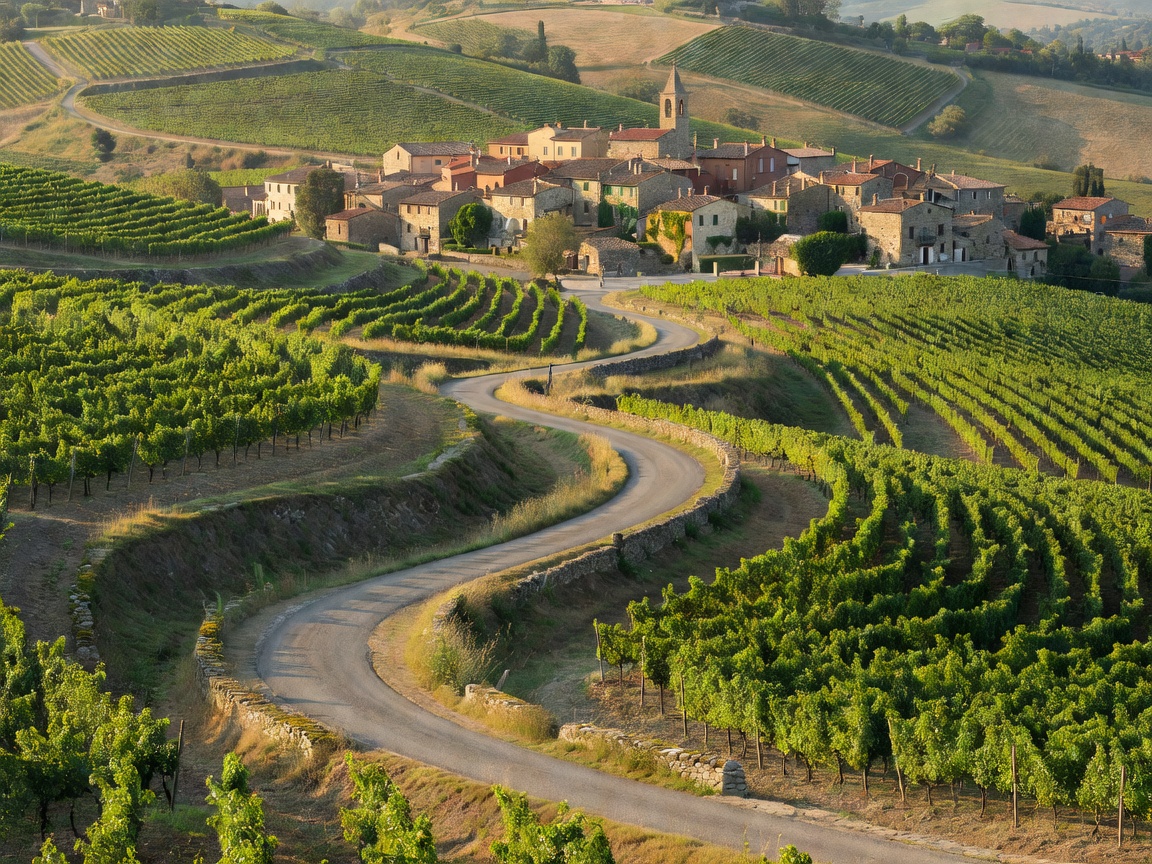
A route is a sequence of practical decisions. How far can the group travel? Which stops are close enough to connect? Where will people sleep? Which visits need advance arrangements? A useful route leaves space for delays and does not confuse regional variety with a checklist.
Five broad landscape lenses
Mediterranean regions often combine warm, dry landscapes with strong food connections and villages, coastlines or hills. Heat and seasonal demand can affect walking comfort and timing.
Central European regions may connect river valleys, historic towns and cellar traditions with more pronounced seasonal changes. Terrain and local transport should be checked stop by stop.
Atlantic-influenced areas can bring maritime weather, greener landscapes and rapid changes in conditions. Rain planning matters for vineyard visits.
Alpine wine landscapes may involve steep slopes, terraces and impressive elevation changes. A short map distance does not necessarily mean an easy transfer.
Northern European emerging areas are varied and developing. Do not assume density, availability or visitor infrastructure; verify each stop directly.
Route length and overnight planning
One base with local day trips reduces luggage movement and makes transport easier. A point-to-point route can show stronger geographic contrast but needs reliable connections and contingency time. Two substantial visits in one day may be enough for many groups. Add an overnight when the transfer would make the second visit rushed.
Transport and cellar density
Use official local transport information and direct organiser guidance for current schedules. Rural cellar density can be uneven. A route that appears compact on a map may require a car, driver, taxi or pre-arranged transfer. If tastings are included, plan transport that does not depend on driving afterward.
Season and food connections
Spring, summer, harvest and winter create different landscapes and operating patterns. Current opening arrangements, prices and event dates are not assumed here. Regional food can add useful context, from preserved products to local breads, vegetables or seafood, but dietary needs require advance confirmation.
Build a comparison grid
- Geography: valley, coast, plateau, slope or plain.
- Visit mix: cellar, tasting room, vineyard or museum context.
- Mobility: walking distance, gradients, surfaces and seating.
- Transport: private, public, hired or arranged.
- Buffer: time for weather, delays and unscheduled rest.
Good for
Travellers comparing regions through landscape, food, architecture and practical route design.
What to know
Opening hours, prices, schedules and availability change. Confirm every stop before booking travel.